-
 Call
Call -
 Location
 -
Time
from 8:00 AM to 5:00 PM

paints sector
paints sector
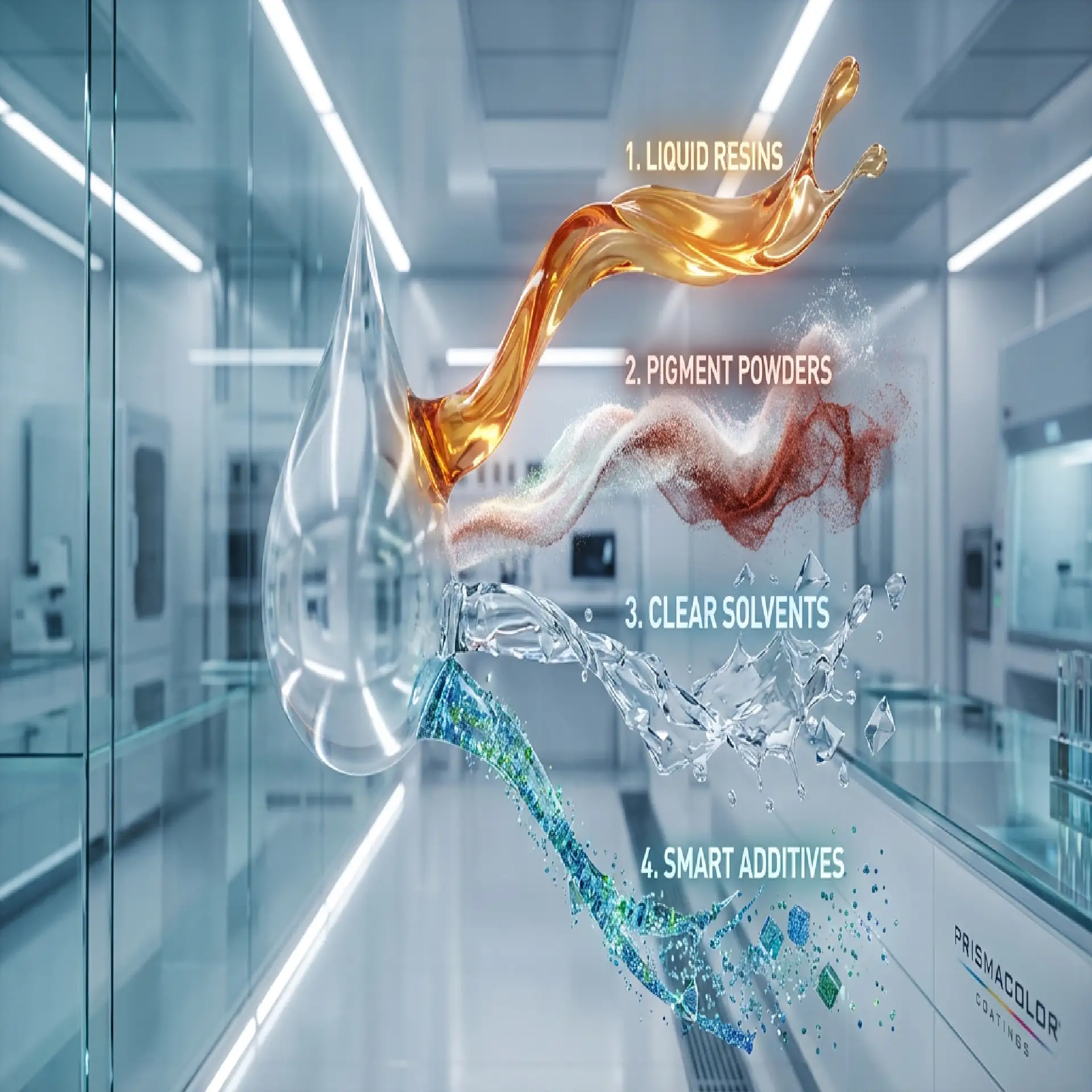
Paints are composed of four main chemical groups, each of which interacts to provide specific properties (such as gloss, adhesion, and weather resistance): 1. Binders or Resins These are the "backbone" of any paint. They are chemical substances that bind all the components together and form a hard layer that adheres to the surface after drying. • The most important types are acrylic, alkyd, epoxy, and polyurethane. • Their function is to determine adhesion strength, chemical resistance, and durability. 2. Pigments These are chemical substances (organic or inorganic) in the form of fine powders that give the paint its optical properties. • Titanium dioxide (TiO2): The most important white pigment in the world due to its superior covering power. • Iron oxides: For red, yellow, and black colors. • Extension agents: Such as calcium carbonate and talc, used to increase the paint's volume, improve its texture, and reduce costs. 3. Solvents These are carrier liquids that maintain the paint's fluid consistency for easy application, then evaporate after application. • Water-based paints: Use water as the primary solvent (environmentally friendly). • Oil-based paints: Use hydrocarbon compounds such as thinner, xylene, and turpentine. 4. Chemical additives Although used in small quantities, they give the paint its "smart" performance. • Driggers: To accelerate drying time. • Flow modifiers: To prevent the paint from running on walls. • Preservatives (Biocides): To protect the paint from mold and bacteria during storage. • UV stabilizers: To protect the color from fading due to sunlight.